Yard and Surface Drainage in Waterloo, IA
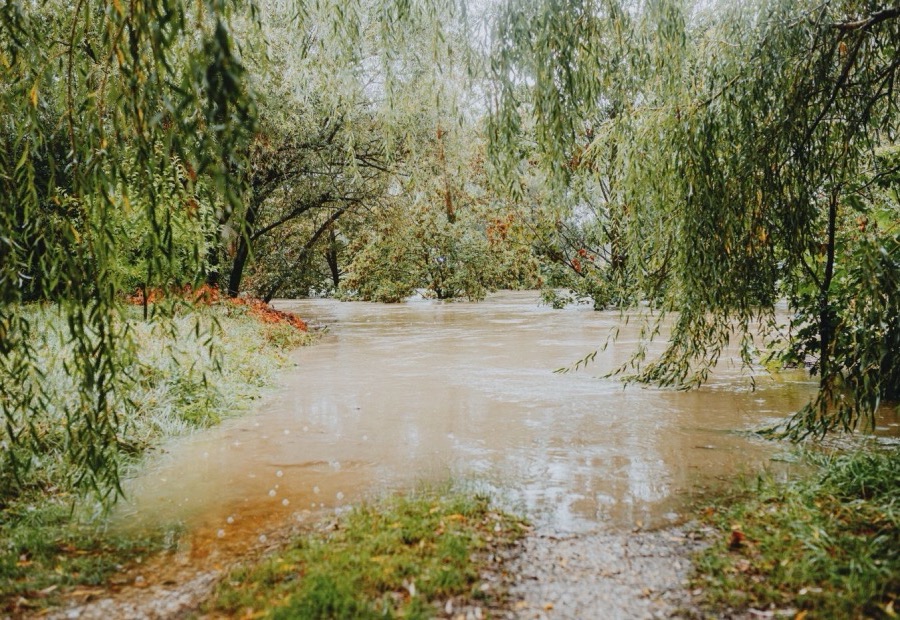
Waterloo Drainage Pros clears standing water and soggy lawns across Waterloo and Black Hawk County, Iowa. We are a licensed and insured drainage contractor, and yard drainage is the call we take most. Low spots, pooling after rain, and a lawn that stays wet for days are surface-water problems, and we handle them with catch basins, channel drains, and regrading.
A catch basin is a grated box that pulls water down at the low point and pipes it to a lower exit. A channel drain does the same across a driveway or a patio. Where the yard itself falls the wrong way, we reshape the grade so the surface sheds. Water lying on the lawn is not the same problem as water trapped in the soil, and it does not want the same buried drain.
Surface Water, Not Groundwater
The first question is where the water sits. Surface water pools on top, clears once the ground dries, and returns to the same low spots every storm. Groundwater keeps a patch spongy long after the surface looks dry, and that one wants a french drain. We read which you have, because a surface fix on a groundwater problem leaves the yard just as wet.
Catch Basins for the Low Spots
A yard usually has one or two places the water heads for. We set a catch basin at each, a box with a grate flush to the grade, and pipe it out to a lower exit. The grate takes leaves and debris on top so the line underneath stays clear. On a lot with several low spots, the basins feed one pipe that carries the whole flow to daylight or a dry well.
Channel Drains Across Hard Surfaces
Driveways, patios, and walks shed all their water to one edge, and it often runs back at the house or floods a low corner. A channel drain is a long slotted trough set into the surface that catches that sheet of water across its full width. It is the right tool where a single grate cannot keep up with a paved run.
Regrading the Low Ground
Sometimes the ground simply falls the wrong way. Settling, an old fill, or a patio built too high sends water where it should not go. We cut and reshape the grade so the surface drains along a line we choose, toward a swale or a basin. Regrading moves the water with the shape of the land instead of a pipe, which is the cheaper fix when it will do the job.
What It Costs
Yard drainage in Waterloo runs about $1,500 to $5,000. A single catch basin with a short pipe sits low. Several basins, a long pipe run, or a wide regrade sits higher. The exit matters as much as the collection: water that can reach daylight is cheaper to handle than water that needs a dry well. Every yard gets a free written estimate first.
Tired of a lawn you cannot mow for days after it rains? (319) 555-0196 gets you a free look. If the grade around the house is part of it, we handle the grading too.
Why does water stand in my yard after every rain?
The ground is holding it. Waterloo clay and loam take water in slowly, and a low or flat spot has nowhere to pass what will not sink. So the water sits until it dries off. The fix is to give it a path, either a catch basin and a pipe to a lower exit, or a regrade that lets the surface shed toward one.
What is a catch basin?
A grated box sunk at the low point of a yard. Surface water drops through the grate, gathers in the box, and leaves down a pipe run to a lower exit. It is the simplest way to drain a spot that ponds, like the foot of a slope, a patio edge, or a driveway apron.
Can you fix a soggy lawn without a full french drain?
Often, yes. If the water is sitting on top rather than trapped in the soil, it does not need a buried collection pipe. A catch basin at the low spot, a channel drain across a hard surface, or a regrade to walk the water along is usually enough. We look at where the water sits and where it can go before we decide.
Will regrading kill my grass?
Regrading reshapes the soil surface, so the worked area is disturbed and then reseeded or sodded. We keep the reshaped strip as tight as the fix allows. The trade is a short stretch of new grass for a lawn that drains, instead of one left wet and thin from standing water.